

Thank God for honest biographers! There are still some writers that emulate the Holy Spirit, always telling the truth. Sandy Finlayson is such a writer. Though writing about the fam
ous Christian hero, Dr. Thomas Chalmers, Finlayson does not hide all of the great man’s blemishes. His excellent 150-page biography entitled Thomas Chalmers is a great introduction to one of Dr. Ian Paisley’s favorite heroes.
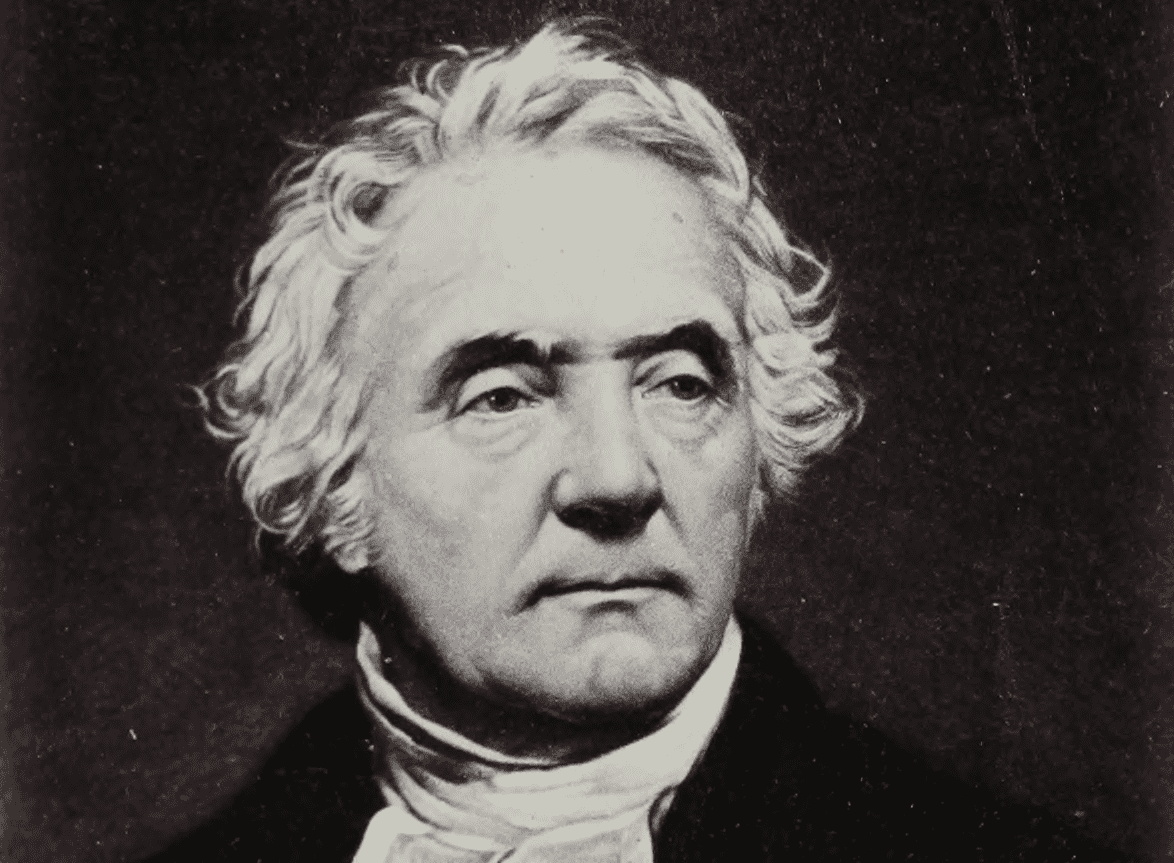
As a small child, Thomas’ unusual gifts were evident. At age three, his formal education began and when only eleven, he entered the University of St. Andrews. There, he commenced his theological studies at age fifteen, and he was especially intrigued in reading The Freedom of the Will by Jonathan Edwards.
Thomas was ordained as minister and installed in the Kilmany parish of the Church of Scotland on May 18, 1803. He was unconverted, very full of himself, and seeking worldly fame. But God has his way with His chosen vessels. “Whosoever exalteth himself shall be abased” (Luke 14:11). For six years Chalmers had executed his unfruitful ministry of self-will. God touched Thomas with the often-fatal disease of consumption (tuberculosis), and two of his siblings died from it. In April 1810, Chalmers’ health seemed to improve, but then another of his sisters died of the sickness. Fearful of death, Thomas began to reassess his life with earnest seeking of the Lord.
Writing to his brother, Alexander, he said, “On the system of – Do this and live, no peace can ever be attained. It is, Believe in the Lord Jesus Christ and thou shalt be saved. When this belief enters the heart, joy and confidence enter along with it.” His conversion profoundly impacted Kilmany. His sermons were no longer moralism, but passionate pleadings for repentance and faith in Christ. Many parishioners were transformed by saving grace. From that point on to the end of his days, Chalmers actively engaged in visiting every home in his parish to evangelize and to edify.
By 1842, Dr. Thomas Chalmers was leading the evangelical campaign to give the people of Scotland their biblical right to choose the minister for their parish. Prior to that, the wealthy patron of each parish would choose the minister and could force him upon an unwilling people. The change finally came in 1843 and was known as the “Disruption.”
The annual assembly of the Church of Scotland gathered in Edinburgh on May 18, 1843. At 3:00 p.m., the outgoing assembly moderator, Dr. David Welsh, placed a document containing the formal protest of the evangelicals on the clerk’s table. He then began walking down the center aisle toward the door of the assembly hall. According to plan, Dr. Chalmers stood up, putting on his top hat, and followed Dr. Welsh. Immediately, hundreds of ministers and elders stood up and followed them out.
Welsh and Chalmers, along with Dr. Gordon, led the large group of church officers along Prince’s Street. Thousands of spectators lined the street cheering and applauding the marchers. The churchmen walked all the way to Tanfield Hall, and there inaugurated The Free Church of Scotland. This new denomination would allow the people of the parish to choose their minister. Dr. Thomas Chalmers was elected as the first moderator of the Free Church. As the first principal of New College, he also continued his ministry of teaching the young men who were preparing for the ministry.
A very interesting detail on page 132 states that he trained the door-to-door workers to lobby the local civil authorities to close the taverns. Robert Murray M'Cheyne, whom Chalmers trained, was one of them. He said that he would love to see all the booze-sellers in Scotland permanently shut down.
Thomas Chalmers was a hero with normal human faults, yet he was used mightily in extending the kingdom of God. Dr. Ian Paisley wrote, “The Free Church of Scotland grew in strength till it is almost as large as the church it left. So I believe our Free Presbyterian Church will go forward with the blessing of God.”
This book can be obtained from Reformation Heritage Books for $8.