

The Lord Jesus Christ commanded His disciples, “Pray ye therefore the Lord of the harvest, that He will send forth laborers into His harvest” (Matthew 9:38). Never has the Lord failed to answer the prayer there commanded.
When John Calvin, William Farel, and Pierre Viret pleaded for God to send help for the great harvest field, God answered abundantly. Numerous, young Swiss and French men came to Switzerland to be trained for the ministry. And the Lord was at the same time preparing teachers that would continue teaching such young men when Calvin and his colleagues had gone to their reward.
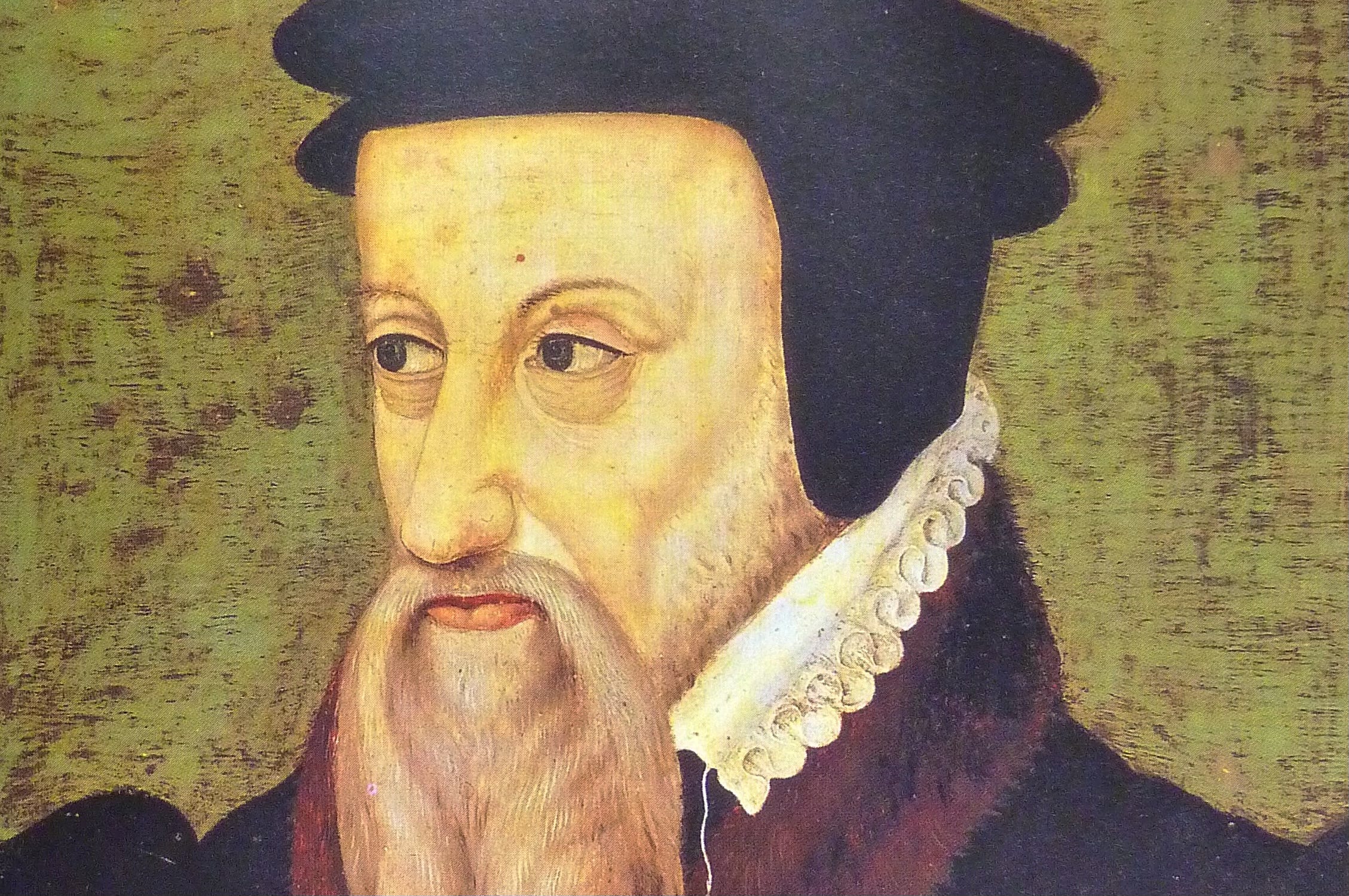
One of those teachers, Theodore Beza, was born into a wealthy family of the French nobility on June 24, 1519. When Theodore was three years old, his uncle Nicholas Beza visited his brother Pierre’s home. Nicholas was a member of the Parlement de Paris, and was greatly delighted with the intelligence of his three-year-old nephew Theodore. Nicholas asked the boy’s parents to let Theodore come to live with him. Somewhat surprisingly, the parents agreed. Perhaps this was because Pierre and his wife had six more children in their home.
Theodore was so traumatized by dislocation from his family that he was literally sick for several years and wanted to die. His uncle Nicholas enlisted the finest physicians of Paris to administer medicines to Theodore. Those cures only compounded the child’s misery. What he needed was his mother!
Happily, when Theodore was nine years old, his uncle let him go to Orleans to study under the famed humanist Melchior Wolmar. From the time of the Renaissance, humanists had been unlocking the treasures of ancient literature. Of course, the richest treasure contained in ancient Greek is the New Testament of the Lord and Savior Jesus Christ. Theodore testified that entering Wolmar’s home was a foretaste of heaven. The very atmosphere of the home was comforting to the child’s heart. The study of the New Testament was enhanced by the teacher whose heart had been set free through the knowledge of justification by faith in Christ alone. Wolmar was a secret follower of Dr. Martin Luther.
As an adult, Theodore celebrated the day of entering Wolmar’s home as his second birthday. However, the Roman Catholic clergy were beginning to realize that the study of the New Testament in both French and Greek languages was their undoing. Therefore, they persuaded King Francis I to expel humanist professors and to ban the publishing of the New Testament. After seven years in Wolmar’s home, the saddest day of Theodore’s life came when his teacher was forced to return to Germany, and Theodore was forbidden to accompany Wolmar.
Pierre Beza ordered his son to enter the University of Orleans and begin the study of civil law. Theodore obeyed and earned his degree in civil law, but he did not practice law since his heart was not in it. He loved literature and began writing romantic poetry. Moving to Paris, he published a book of his poems, which was a great success. Sudden popularity swept Theodore into the elite social circles of Paris. He lived luxuriously from his publishing and from two ecclesiastical benefices earlier granted to him from the “church.”
As Theodore read the writings of the Protestant Reformers, he realized the danger that surrounded him. Sexual promiscuity was rampant among the Parisian social elite. Therefore, Theodore secretly married Claudine Denosse: secretly, because though she was from a wealthy family, she was not of nobility as Theodore was.
Life was happy for the young couple living among friends and enjoying plenty, until Theodore was stricken with the plague. As the 29-year-old lay helplessly on what he thought was his deathbed, he cried unto the Lord, and God delivered him “from the hand of the grave” (Psalm 89:48). In the time of his sickness, he promised God that if he lived, then he would serve Christ. As soon as the Lord raised him up, he and Claudine gathered as many of their possessions as they could manage. They hastily abandoned their homeland, their families, and their remaining wealth, fleeing to Geneva, Switzerland, to truly follow Christ.
Near the close of 1548, Theodore and Claudine stood in Geneva’s St. Peter’s cathedral and publicly said their marriage vows in the presence of John Calvin and several other friends. Soon afterward, the Parlement de Paris declared Theodore a criminal, confiscated his remaining wealth, and publicly burned him in effigy as a heretic. Thus, Beza’s ministry began, a ministry that would extend over half a century. God had mightily answered the prayers of the men which became Theodore’s colleagues in the ministry. When Calvin, Farel, and Viret passed into glory, Beza was left to continue leading French Protestantism for another 30 years,
He capably filled Calvin’s shoes preaching in St Peter’s church of Geneva and training another generation of young men for the ministry. God used Beza in his French homeland as he often secretly traveled there to preach for the persecuted Huguenots and to raise money and troops for the French Protestant armies. He was the private counselor and minister to the French King Henry IV of Navarre, to whom he had ministered the Gospel since Henry’s childhood.
Prayer does indeed “move the Hand that moves the world.” It is God’s will that we pray for laborers to be sent into His harvest fields. Never has the Lord failed to answer the prayer of Matthew 9:38. Pray that the Lord will raise up such men as Theodore Beza in our day.