

Dr. Martin Luther had no idea of the earthshaking effect that posting his 95 Theses would produce. He only wanted to correct the wrongs he observed in his beloved Roman Catholic religion. He had no plan to abandon the institution to which he had sworn his life. It was Rome that left him by excommunication in 1521. Of course, Luther never repented of accepting the Word of God which had driven the wedge between them.
All over Europe, scholars were reading Luther’s writings. Many were emboldened by his stalwart example to take their stand for the Scriptures of truth. Even in the pope’s Italy, a viable reformation was underway. Scattered throughout the country were men and women casting off the mind-control of the papacy. In response, fear and plans for retaliation grew in the minds of the Roman Catholic hierarchy. Desire for reform in the church was not new. Two centuries before in the prestigious University of Padua, Marsilius of Padua had published his Defensor Pacis (The Defender of Peace). Published in 1324, it refuted the pope’s claim of political and spiritual supremacy. The treatise was fiercely condemned by popes Benedict XII and Clement VI.
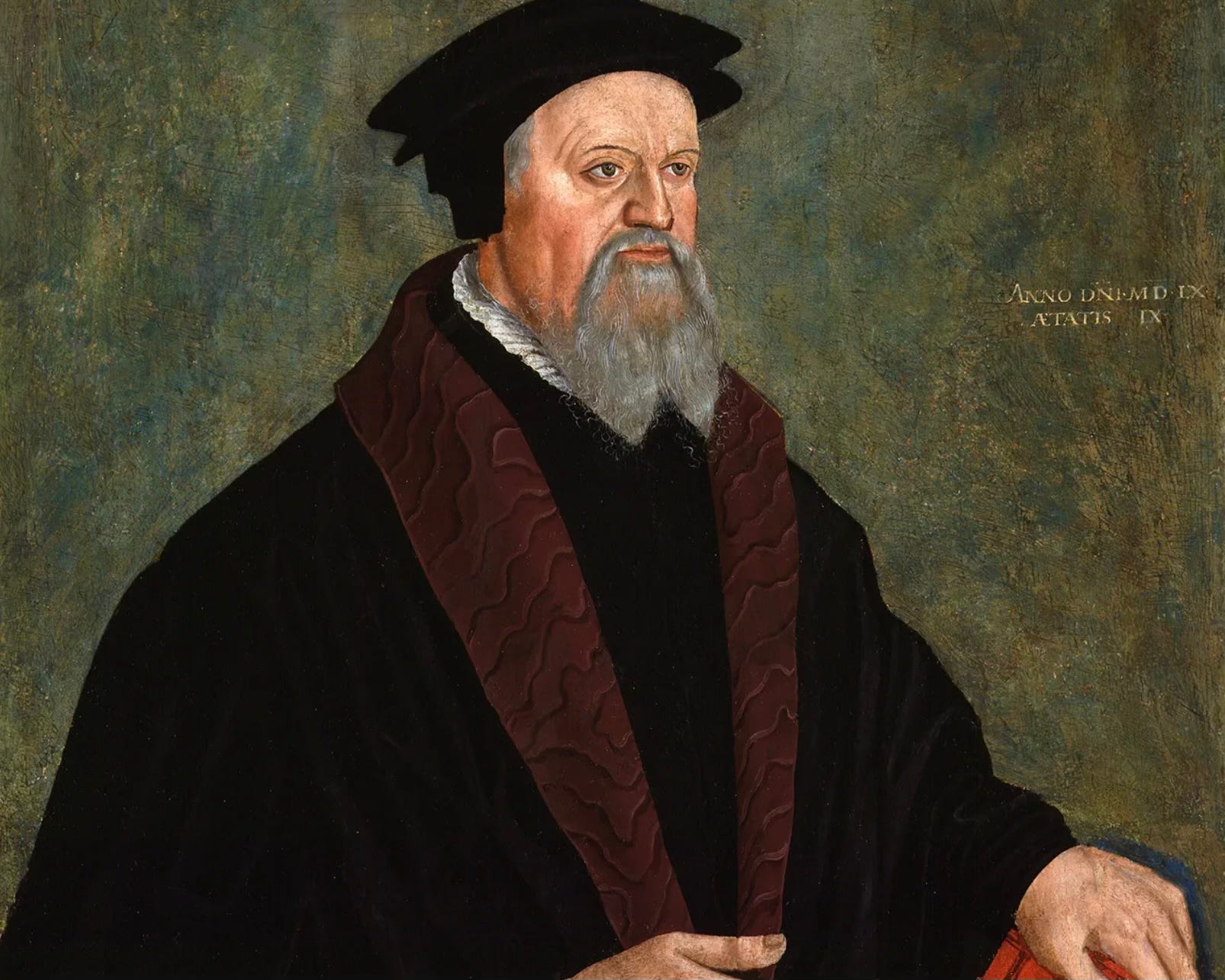
One of the lesser-known Protestant Reformers of the sixteenth century was Peter Martyr Vermigli of Florence, Italy. He was born in 1499 to parents who were open-minded enough to begin teaching him languages early that would enable him to excel. At age 15, Peter entered a monastery to continue his education. His rapid progress so impressed his superiors that they sent him to the University of Padua.
In Padua, Peter became acquainted with fellow students who later became Roman Catholic cardinals and whose influence God would use for Peter’s protection. Peter loved Augustine’s writings and appreciated the humanists Marsilius and Mirandola, who daringly wrote against papal authority.
Graduating from Padua, Peter was ordained a priest and begin preaching all over Italy. After ministering successfully as an itinerant for three years, he was promoted by the hierarchy to the abbacy of the Spoleto monasteries. Peter restored those religious houses to proper discipline, which had long been lax and scandalous. His faithful labors in Spoleto brought Peter further promotion.
He was moved to a monastery near Naples. There his life would change forever through fellowship with Juan de Valdes. Valdes was trying to bring reform within Roman Catholicism. He was closely watched by the papacy. Yet, he introduced Peter to the writings of Martin Bucer, Ulrich Zwingli, and justification by faith in Christ alone. Peter soon preached a sermon that sounded Reformed. He was reported to the authorities and suspended from preaching, but his old friends who were cardinals in Rome, had the suspension revoked.
The authorities deemed it wise to move him far away from Naples. They made him the prior of the Basilica of Lucca in northern Italy. Many there had already been exposed to reformed doctrine and wanted the pure Word of God. So, Peter established classes for adults, youth, and children to study the Scriptures. Peter’s assistants, Jerome Zanchius, Paolo Lacizi, and Immanuel Tremellius also believed in free justification. All was going well until one of the adult students openly questioned papal authority and another follower celebrated the Lord’s Supper instead of the mass.
Vermigli was therefore summoned to a meeting in Genoa for a discussion, but his friends warned him that he would be tried as a heretic. Peter accepted the counsel of his friends and prepared to leave his beloved homeland, never to return.
In August of 1542, Vermigli and three of his closest associates left on horseback heading northward. They made a brief visit to Florence where Peter had grown up. There Peter convinced another faithful preacher, Bernardino Ochino, to flee for his life. From Florence, they traveled on to Ferrara and Verona and arrived in Zurich after having traveled just over one month.
The reformed church showed the Italian refugees abundant hospitality. Swiss Reformer Oswald Myconius recommended Vermigli to Martin Bucer in Strasburg, since the Old Testament professor Wolfgang Capito had recently died. God worked marvelously providing a five-year teaching arrangement for the students, Bucer, and Vermigli; however, opposition arose from the overly zealous Lutherans who would not tolerate the Reformed view of the Lord’s Supper.
Soon a great and effectual door was opened for Peter in England. The newly crowned King Edward VI, along with archbishop Thomas Cranmer, invited Vermigli to lead the reformation at Oxford University. Glad to leave the strife in Strasburg, Peter came, followed a little later by his wife Catherine. In 1549, Peter persuaded Bucer to come and direct the reformation at Cambridge University.
Great progress was being made, but the English people were shocked to see Vermigli, an ex-monk in public with his wife, an ex-nun. Also, getting the English people away from the celebration of the mass proved to be difficult. The progress of the work of reformation slowed down with the death of Martin Bucer in 1551. But it came to an abrupt halt in 1553 with the death of Peter’s wife, followed by the death of young King Edward. Surprisingly, the new English queen, “Bloody Mary” allowed Peter to return to Europe.
Peter Martyr Vermigli spent his final years teaching in the prestigious seminary of Zurich with an old friend, Heinrich Bullinger. He died of a fever on November 12, 1562 when Peter went home to be with His Lord.
Rev. M. Mooney | Minister of Trinity FPC, AL