

Chapter 11
Key verse: “And the LORD said, Behold, the people is one, and they have all one language; and this they begin to do: and now nothing will be restrained from them, which they have imagined to do” (Genesis 11:6).
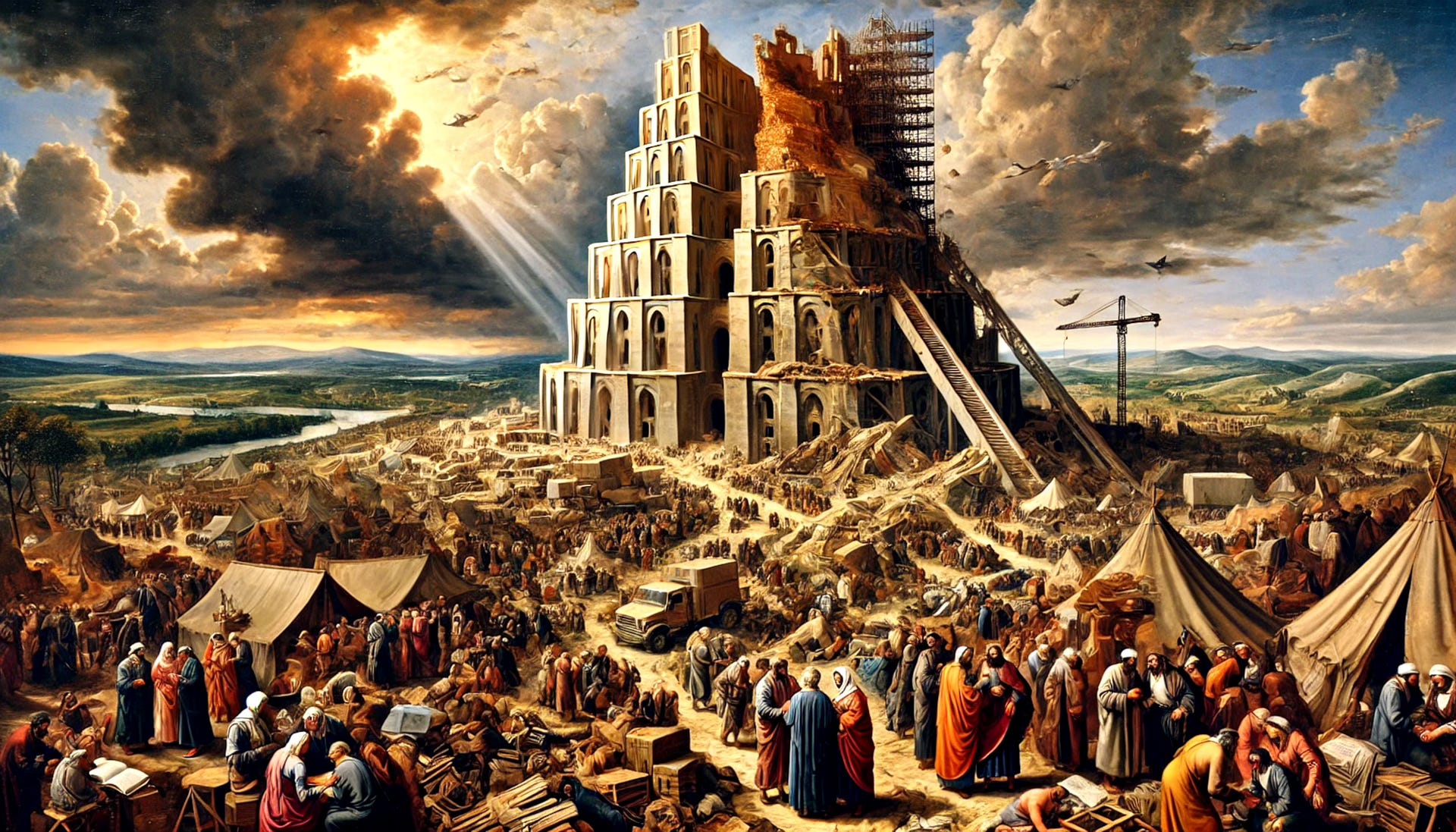
This text defines the problem with the tower of Babel. It was humanistic. It was anti-God. God determined that the people had to be stopped from forming a one-world idolatrous religion.
Summary
The history of God confounding the languages at the tower of Babel is vital to understand the division of peoples in the world. This chapter records God’s disruption of man’s rebellious plan to raise an edifice in defiance of God. The united efforts of men under Nimrod’s leadership were idolatrous and anti-God. By pooling their talents and resources, they sought to live without the true God. Their man-centred goal was rebellious to God’s command to subdue the earth. God, therefore, confounded their language throwing them into confusion. As a result of God’s judgment by a direct miracle upon the minds of the people they could only find fellowship and support with others of the same speech. This confounding of languages reduced their abilities and their resources forcing them to abandon their prideful attempt to build the tower of Babel. It also forced them to dwell apart leading them to form separate nations. From the genealogy found in verses 10–26 we learn that the scattering of the people took place about 100 years after Noah’s flood and that Abraham was born 292 years after the flood. All of the men listed in this genealogy were still alive when Abraham was born. This history provides a definite link between the date of the flood and God’s call to Abraham to leave Ur of the Chaldees to form a new and separate nation to worship and serve God.
Observations
The gift of language sets men apart from the animal world. There is a vast difference between the chatter of animals and the human ability to communicate specific information and ideas clearly to one-another by words uttered from the lip. Evolutionists do not know how to explain the origin of man’s capability to communicate by speech. The Genesis record of man’s creation in God’s likeness answers this question for the Bible reader. God created man to enjoy the knowledge of God and communicate it by human language. God speaks to men through the Scriptures written in the very language of men. The whole gospel is based on God’s Word, His written revelation. The apostle Paul stated that the gift of salvation comes to man’s heart and mind through God’s inspired Word, “So then faith cometh by hearing and hearing by the word of God” (Romans 10:17).
God’s confusing the language of the people was a definite judgment on their rebellion.
Man’s ability to communicate through one language was misused in a concerted effort to defy God. When the people migrated to the land of Shinar, they sought to establish a centre of human achievement. They chose a flat plain in the land of Shinar, they devised kiln-dried or sun-dried brick that enabled them to build to greater heights. They planned a whole city with an impressive tower. By exercising political pressure to keep the people united they were as one people following their own imagination (11:6). This reference to man’s imagination reminds us of events prior to Noah’s flood, when “every imagination of the thoughts of his heart was only evil continually” (6:5). Fallen man is incapable of guiding himself without the light of God’s Word. Left to his own thinking he will always depart from God.
The rebellious city was named Babel due to the confusion of languages. The record clearly states that the name is derived from God’s act of confounding the language of the people. “Therefore is the name of it called Babel…” (11:9). The name Babel is synonymous with Babylon, that city and religious system that reappears throughout the Bible in rebellion to God. The fact that the project at the first Babel was confounded and brought to a speedy end sets forth the doom of every body of people that defies God. At the end of the world “mystery Babylon” falls (Revelation 18:2).
The genealogy of the family line of Shem through to the birth of Abraham settles dates for a young earth. Just as Genesis 5 provides a timeline for the years between the creation of Adam and Noah’s flood, so Genesis 11 provides a timeline between the date of Noah’s flood and the birth of Abraham. By working from the year of the flood, and by adding the year of each man’s birth, with his father’s age at the time of his birth, we arrive at 100 years after the flood as an approximate date when God sent confusion of languages at Babel (11:10–16). Remember that Peleg received his name as a result of the division of the earth, which we interpreted to be from the result of God confounding the languages (10:25).
By the same method, we arrive at 292 years from Noah’s flood until Abraham’s birth. That makes the year of Abraham’s birth to be 1948 years after creation. To assist our memories, we may round up this timeframe from Creation to Abraham to 2000 years. The history of the earth and the history of man is settled within these eleven chapters of God’s inspired word. By all standards, the Genesis record reveals a young earth. As creationists, here we take our stand.
Application
In light of God’s great gift of language, we must use this faculty of speech to study God’s Word to worship Him in Spirit and in truth. Making good use of the Word of God is vital to our faith and walk with God. We must not misuse this gift of speech for we shall give account of every idle word. We should use every opportunity to evangelize through our words. “Let your speech be alway with grace, seasoned with salt, that ye may know how ye ought to answer every man” (Colossians 4:6).
Rev. Ian Goligher | Retired Minister, formerly Cloverdale FPC, BC